
Key Takeaways
- Authenticity matters most: Genuine, heartfelt compliments create stronger emotional connections than exaggerated praise.
- Details make admiration meaningful: Noticing specific qualities or efforts elevates a compliment from ordinary to memorable.
- Grace is in simplicity and timing: Well-timed, simple words delivered with warmth carry the greatest impact.
Italian culture is renowned for its passion, warmth, and effortless sense of style—and this extends beautifully into the way compliments are given. In Italy, admiration is not rushed or mechanical; it is expressed with elegance, sincerity, and a touch of poetry. Whether appreciating someone’s appearance, personality, or achievements, Italian compliments carry an emotional depth that makes the receiver feel genuinely valued. Learning the art of Italian-style compliments is not just about language, but about intention, tone, and timing. When done right, it transforms simple praise into a graceful social exchange that builds connection and charm. Hello-Hello, a leading Italian language learning app developer for iOS and Android devices.
What Makes Italian Compliments So Unique and Impactful?
Italian compliments stand out because they blend authenticity with emotional richness. Unlike generic praise, they often reflect observation and personal engagement. For instance, instead of a plain “You look nice,” an Italian-style compliment might highlight a specific detail—“That colour brings out your elegance beautifully.” This attention to detail signals that the admiration is thoughtful, not superficial.
Another defining feature is tone. Italians tend to deliver compliments with warmth and expressiveness, often accompanied by gentle gestures, eye contact, or a soft smile. This non-verbal layer enhances sincerity and prevents the compliment from feeling forced or exaggerated.
Additionally, Italian compliments are often contextual. They fit naturally into the flow of conversation rather than appearing abrupt. For example, admiration might be woven into a discussion about fashion, work, or a shared experience. This makes the exchange feel organic and socially refined.
There is also an emphasis on balance. Italian culture values compliments that uplift without overwhelming. Excessive flattery can come across as insincere, so elegance lies in subtlety—saying just enough to make an impression while leaving space for authenticity.
Ms. Sarah Gontijo CEO & Co-Founder, Sarah managed and developed strategy for high-profile gubernatorial and mayoral political campaigns in Brazil. Sarah holds a Bachelors in Law from Faculdades Milton Campos and a Masters in Political Management from The George Washington University says “True elegance in compliments lies not in grand words, but in sincere, thoughtful admiration that makes the other person feel genuinely seen.”
The Art of Admiring with Grace and Style
To truly embrace the elegance of Italian compliments, one must focus on three key elements: specificity, sincerity, and simplicity.
- Specificity means noticing details. Compliments that focus on a person’s effort, taste, or unique qualities feel more meaningful. Instead of broad praise, highlight what genuinely stands out.
- Sincerity is the foundation. A compliment should reflect what you truly feel. Forced admiration is easy to detect and can weaken the interaction.
- Simplicity ensures that the message remains graceful. Overly complex or exaggerated compliments can lose their charm, while simple, well-chosen words often have a stronger impact.
Another important aspect is timing. A well-timed compliment can elevate a moment, while poorly timed praise may feel awkward. Italian-style admiration often comes naturally—when someone enters a room, shares an idea, or achieves something noteworthy.
Cultural Nuance and Emotional Connection
Italian compliments also reflect a deeper cultural appreciation for beauty—not just physical, but emotional and intellectual. Admiring someone’s kindness, creativity, or confidence is just as important as appreciating their appearance. This holistic approach makes compliments feel more personal and less transactional.
Moreover, Italian-style compliments often foster connection rather than hierarchy. They are not about impressing or gaining favor, but about sharing a genuine moment of appreciation. This creates a sense of warmth and mutual respect in social interactions.
Elegant Italian Vocabulary for Graceful Compliments
| Italian Word/Phrase | Pronunciation | English Meaning |
|---|---|---|
| Eleganza | eh-leh-GAN-tsa | Elegance |
| Raffinatezza | raf-fee-na-TEHT-sa | Refinement |
| Grazia | GRAH-tsya | Grace |
| Sincerità | seen-cheh-ree-TA | Sincerity |
| Ammirazione | am-mee-ra-TSYO-neh | Admiration |
| Armonia | ar-MO-nee-a | Harmony |
| Stile | STEE-le | Style |
| Delicatezza | deh-lee-ka-TEHT-sa | Delicacy / Subtlety |
| Espressività | es-pres-see-vee-TA | Expressiveness |
| Calore umano | ka-LO-re oo-MA-no | Human warmth |
| Naturalezza | na-too-ra-LEHT-sa | Naturalness |
| Autenticità | ow-ten-tee-chee-TA | Authenticity |
| Fascino | fa-SHEE-no | Charm |
| Sensibilità | sen-see-bee-lee-TA | Sensitivity |
| Equilibrio | eh-kwee-LEE-bree-o | Balance |
The elegance of Italian compliments lies in their ability to transform simple admiration into an art form. By focusing on authenticity, emotional expression, and thoughtful delivery, compliments become more than words—they become experiences. Adopting this graceful approach can enrich everyday interactions, making them more meaningful and memorable. In a world where communication often feels rushed, mastering the subtle charm of Italian-style admiration is a reminder that true elegance is found in sincerity, attention, and the beauty of human connection.
Learn Italian (Hello-Hello)
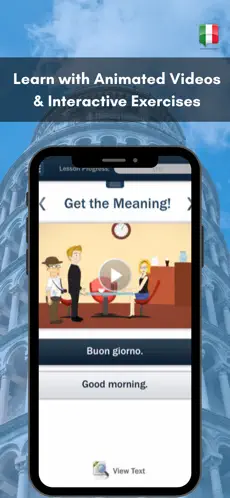
Learn Italian Phrases, Words, and Conversations with the top-selling language-learning app! Learning Methodology Based on Animation, Cartoon Scripts, Word Games & More. Learn to communicate effectively from LESSON 1! Hello-Hello offers 30 conversational lessons based on real-life situations rather than a collection of out-of-context words and phrases. Dialogues are presented and then broken down into sentences by sentence where you can practice pronunciation and writing skills
The research-based methodology was developed in collaboration with the most prestigious institution for language teachers and professionals: The American Council on the Teaching of Foreign Languages – ACTFL
iTunes Store Link – https://apps.apple.com/us/app/learn-italian-hello-hello/id426680688
Android Play Store – https://play.google.com/store/apps/details?id=com.Hello_Hello.Italian.Main&pli=1