
Direct Answer Summary
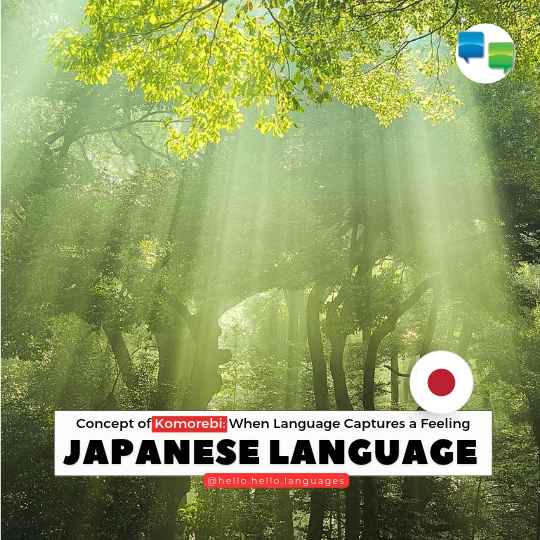
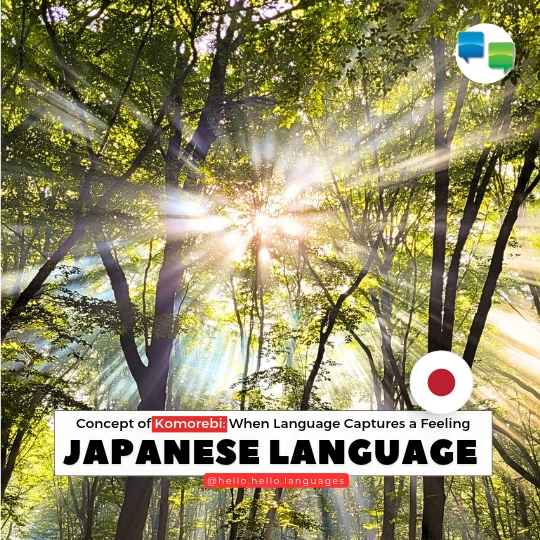
- Komorebi describes sunlight filtering through the leaves and branches of trees.
- The concept reflects an appreciation of nature, fleeting beauty and the changing qualities of light.
- It reminds us that language can capture subtle experiences and emotions that ordinary descriptions may struggle to express.
Have you ever stood beneath a tree and watched sunlight filter through its leaves, creating delicate patterns of light and shadow on the ground? The moment may last only a few seconds, yet it can leave behind a feeling of calm, wonder and quiet happiness.
The Japanese language has a beautiful word for this experience: Komorebi (木漏れ日).
More than a description of sunlight passing through trees, Komorebi captures a fleeting natural moment that can be difficult to express in other languages. It reflects how language can preserve not only what we see but also what we feel when we experience the world around us, shares, Hello-Hello, a top Japanese language learning app developer for iOS and Android devices.

What Does Komorebi Mean in Japanese?
Komorebi is a Japanese word that describes sunlight filtering through the leaves and branches of trees. It brings together three Japanese characters:
- 木 (Ki): Tree or trees.
- 漏れ (More): To leak, escape or filter through.
- 日 (Bi): Sunlight or day.
Together, they express the image of sunlight gently passing through a canopy of leaves.
Unlike ordinary descriptions of sunlight, Komorebi draws attention to the relationship between light, foliage and movement. The leaves shift with the breeze, the sunlight changes its direction, and the patterns on the ground continuously transform. It is a natural phenomenon, but the word also carries an emotional quality that makes the experience memorable.
“Komorebi reminds us that beauty does not always need to be grand or extraordinary. Sometimes, it exists in the quietest moments—a little sunlight passing through the leaves, a shifting shadow, or a fleeting connection with nature. The art lies in noticing these moments before they disappear.” Says, Ms Sarah Gontijo, CEO & Co-Founder, Hello-Hello, who holds a Bachelor’s in Law from Faculdades Milton Campos and a Master’s in Political Management from The George Washington University.
Why Does Komorebi Feel So Special?
Komorebi is beautiful because it describes something that cannot be completely captured or controlled. The sunlight appears, changes and disappears as the leaves move.
Its appeal lies in several subtle qualities:
- A sense of tranquillity: Filtered sunlight can create a peaceful atmosphere that encourages people to slow down.
- The beauty of imperfection: The changing patterns of light and shadow are irregular, yet naturally harmonious.
- A connection with nature: It reminds us that even ordinary surroundings can offer moments of beauty.
- The fleeting nature of time: The light patterns are temporary, making each moment feel unique.
Komorebi invites us to notice details that might otherwise go unnoticed. It encourages a quieter way of experiencing the world, where beauty does not need to be dramatic to be meaningful.

How Does Komorebi Reflect Japanese Aesthetics?
The concept of Komorebi is often associated with broader Japanese aesthetic sensibilities, particularly the appreciation of simplicity, impermanence and the natural world. One related idea is Wabi-sabi, an aesthetic philosophy that finds beauty in imperfection, simplicity and the passage of time. Another is Mono no aware, which describes a sensitivity to the transient nature of things and the gentle emotions that arise from recognising their impermanence.
Although these concepts are distinct from Komorebi, they share an appreciation for experiences that are subtle, temporary and deeply connected to nature. A few rays of sunlight passing through a tree may appear insignificant at first. Yet, when observed carefully, they reveal a kind of beauty that does not require decoration or explanation.
Why Do Certain Languages Have Words for Untranslatable Feelings?
Every language develops expressions shaped by its culture, environment and everyday experiences. Some words describe emotions or natural phenomena so precisely that translating them into another language requires an entire sentence. Komorebi is one such example. English can describe it as sunlight filtering through leaves, but that explanation does not always communicate the atmosphere or emotional impression associated with the Japanese word.
Other languages also contain expressions that capture distinctive feelings and experiences. Such words remind us that language is not simply a tool for exchanging information. It also shapes how people recognise, interpret and communicate the world around them. The existence of these expressions encourages curiosity about other cultures and expands our ability to describe experiences that might otherwise remain difficult to articulate.

Other Beautiful Japanese Words That Capture Nature and Emotions
Start the section with this short introduction:
Komorebi is not the only Japanese expression that gives meaning to subtle experiences and moments in nature. The Japanese language has several other beautiful words that describe the changing seasons, natural surroundings and feelings that are sometimes difficult to express in English. Here are the Japanese characters that make up some related words, explained in the same format as Komorebi:
- Shinrin-yoku (森林浴) – Forest Bathing
- 森 (Shin): Forest.
- 林 (Rin): Grove or woods.
- 浴 (Yoku): Bathing or immersing oneself.
- Wabi-sabi (侘び寂び) – Beauty in Imperfection
- 侘び (Wabi): Simplicity, quietness or finding beauty in modest things.
- 寂び (Sabi): Beauty that comes with age, wear and the passage of time.
- Kōyō (紅葉) – Autumn Leaves
- 紅 (Kō): Deep red or crimson.
- 葉 (Yō): Leaf or leaves.
- Tsukimi (月見) – Moon Viewing
- 月 (Tsuki): Moon.
- 見 (Mi): Seeing or viewing.
- Hanami (花見) – Flower Viewing
- 花 (Hana): Flower or blossom.
- 見 (Mi): Seeing or viewing.
- Yukimi (雪見) – Snow Viewing
- 雪 (Yuki): Snow.
- 見 (Mi): Seeing or viewing.
- Hoshizora (星空) – Starry Sky
- 星 (Hoshi): Star.
- 空 (Sora): Sky.
- Amayadori (雨宿り) – Taking Shelter from Rain
- 雨 (Ama): Rain.
- 宿り (Yadori): Shelter, lodging or taking refuge.
- Kogarashi (木枯らし) – Winter Wind
- 木 (Ko): Tree.
- 枯らし (Garashi): Withering or drying out.
- Asayake (朝焼け) – Morning Glow
- 朝 (Asa): Morning.
- 焼け (Yake): Glowing, reddening or appearing sunlit.
Where Can We Experience Komorebi in Everyday Life?
Komorebi does not require a particular location, season or special occasion. It can be experienced in an ordinary garden, a quiet park, a forest trail or even beneath a tree along a familiar street. Early morning and late afternoon often provide beautiful opportunities to notice filtered sunlight, although the effect depends on the position of the sun, the density of the foliage and the surrounding environment.
To appreciate the moment, simply pause and observe how the light moves through the leaves. Notice the shifting shadows, the changing brightness and the way the surroundings seem to transform. It is not necessary to photograph or document the experience. Sometimes, allowing yourself to be present is enough.
Why Does Komorebi Matter Beyond Its Literal Meaning?
Komorebi reminds us that meaningful experiences are not always associated with major events or extraordinary destinations. Sometimes, a small interaction with nature can create a lasting impression. In a world where daily routines often demand constant attention, the concept offers a gentle reminder to observe our surroundings more carefully. It encourages us to appreciate temporary moments rather than overlook them in the rush of everyday life.
Ultimately, Komorebi is an example of how a single word can hold an entire experience. It describes sunlight, but it also opens a window into the relationship between nature, perception and emotion.
A Small Moment, Beautifully Expressed
The Japanese concept of Komorebi teaches us that beauty often exists in moments we rarely stop to notice. Sunlight passing through leaves may be an ordinary occurrence, but giving that experience a name allows us to recognise and appreciate it differently. Perhaps that is the quiet power of language: it helps us see familiar things with fresh eyes and gives expression to feelings we may have experienced but never quite known how to describe.
Learn Japanese (Hello-Hello)
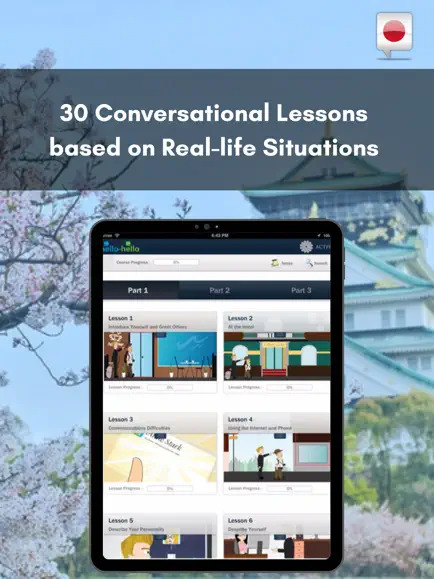
Hello-Hello, which is the leading mobile language learning application developer, offers users a unique opportunity to learn the Japanese language with iOS and Android Apps. Learn Japanese by Hello-Hello iPhone app, which is developed in collaboration with The American Council on the Teaching of Foreign Languages (ACTFL), offers 30 conversational lessons based on real-life situations rather than a collection of out-of-context words and phrases. Dialogues are presented and then broken down into sentences where you can practice pronunciation and writing skills. The key features of Hello-Hello’s Japanese app that make it THE BEST language learning app available on iTunes are –
- Animated videos and comic strips– New games to practice reading and listening skills
- Cleaner and more friendly user interface
- Follow your course progress
- Take notes
- Receive notifications with lesson reminders. The more you practice, the more you learn!
- Receive notifications with new words to build your vocabulary.
Android Play – Learn Japanese Hello-Hello, iTunes Store – Learn Japanese (Hello-Hello)