
Direct Answer Summary
- Sobremesa is a Spanish cultural expression describing conversations and socialising after meals.
- The tradition reflects the importance of hospitality, food and shared experiences in Spanish society.
- It remains a recognisable part of Spanish social life, particularly during family lunches, weekends and celebrations.
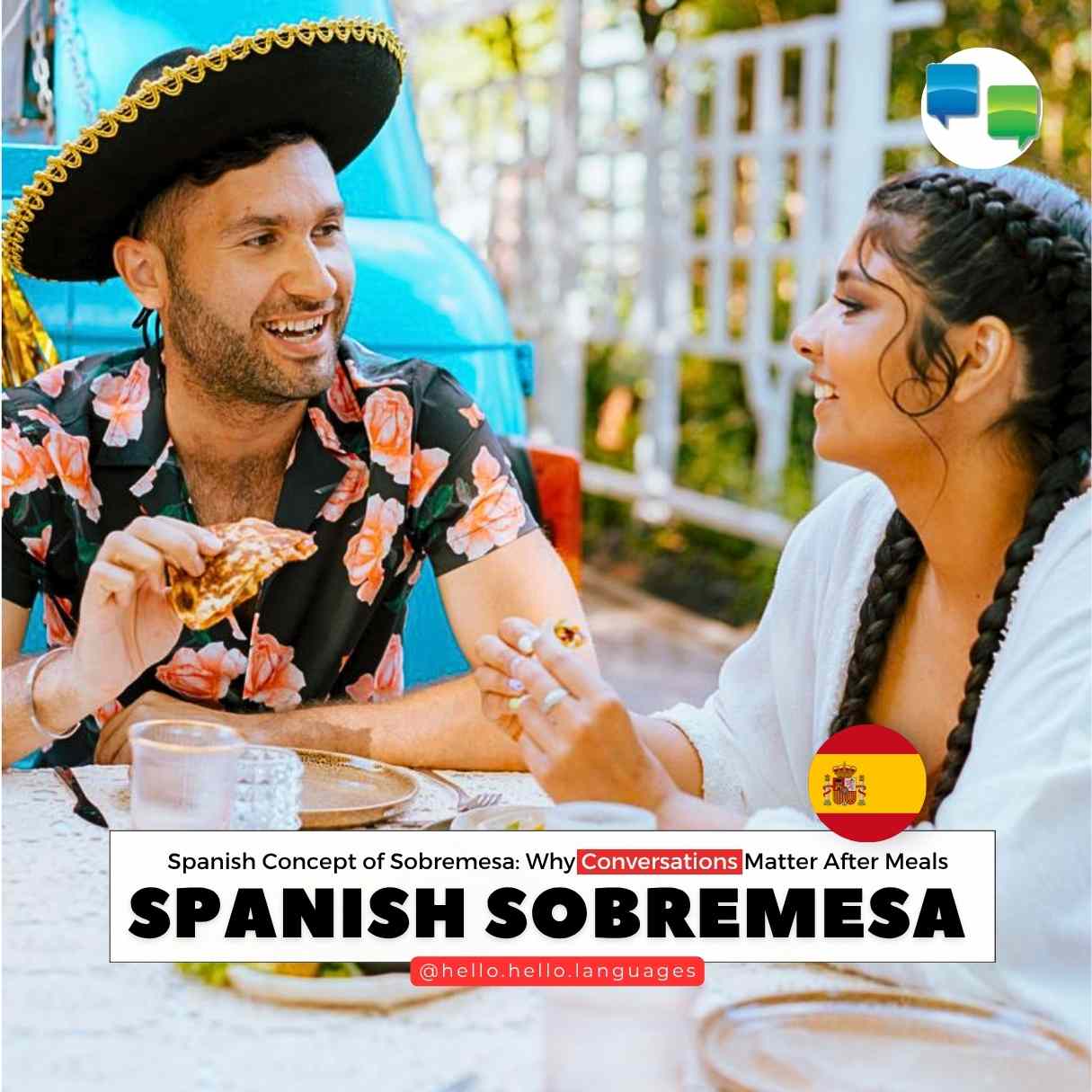
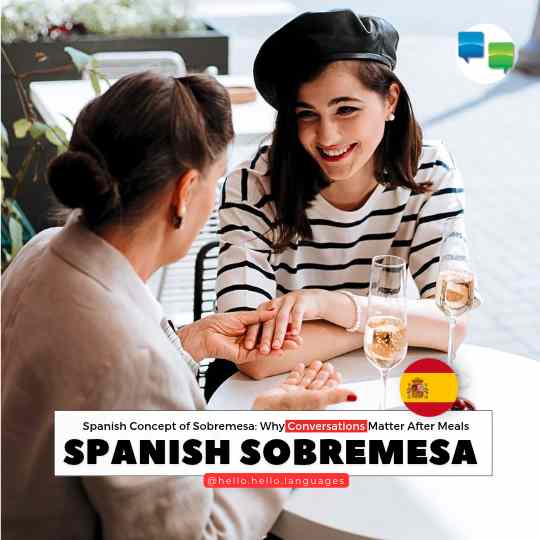
In Spain, finishing a meal does not necessarily mean getting up from the table. In many households, restaurants and social gatherings, people remain seated long after the plates have been cleared, enjoying conversations over coffee, dessert or simply another drink. This familiar Spanish tradition is known as sobremesa.
The word captures something that is difficult to translate into a single English expression. It describes the time spent talking and socialising after a meal, when there is no immediate pressure to return to work or move on to another activity. More than a dining habit, sobremesa reflects an important aspect of Spanish culture: the value placed on conversation, hospitality and spending time together shares Hello-Hello, a leading Spanish language learning app developer for iOS and Android devices.
What Does Sobremesa Mean in the Spanish Language?
The Spanish word sobremesa is formed from sobre (over or on) and mesa (table). Literally, it refers to what happens over the table. In everyday Spanish, however, it describes the social time that follows a meal. The term has no perfect English equivalent. Expressions such as “after-dinner conversation” or “lingering at the table” communicate part of its meaning, but they do not fully capture its cultural significance.
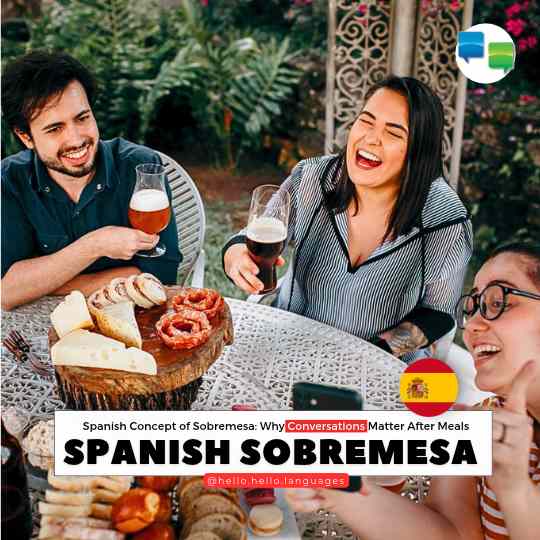
Sobremesa can last for a few minutes or several hours, depending on the occasion, company and setting. It is common during family lunches, Sunday gatherings, celebrations and meals with friends. Conversations may continue over coffee, dessert or a traditional after-meal drink. Importantly, sobremesa is not a formal event with a fixed schedule. It happens naturally when people enjoy one another’s company and do not feel the need to leave immediately.
Why Is Sobremesa an Important Part of Spanish Culture?
Spanish food culture is closely connected with social interaction. Meals are often treated as opportunities to gather, share experiences and enjoy conversation rather than simply satisfy hunger. Lunch, traditionally the main meal of the day in many parts of Spain, can become an extended social occasion, particularly on weekends and holidays. Families may gather around the dining table, enjoy several courses and continue talking after the meal has ended.
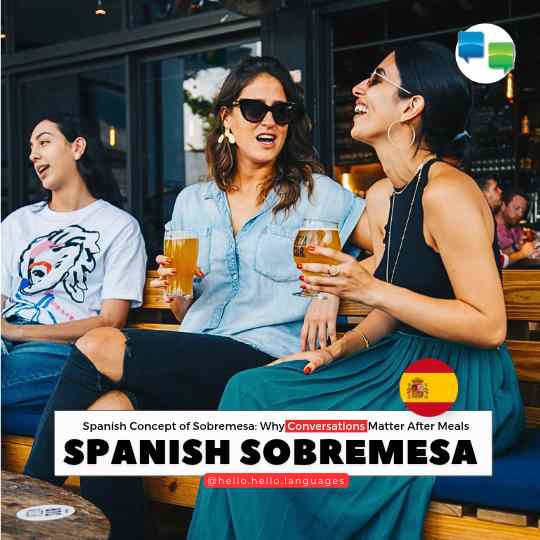
In restaurants, groups of friends may remain seated long after finishing their food. Instead of immediately requesting the bill, they continue their discussions, order coffee or enjoy the atmosphere. This practice reflects a cultural appreciation for unhurried socialising. The time spent together is considered part of the experience, not an unnecessary extension of the meal.
How Does Sobremesa Reflect Spanish Social Customs?
Sobremesa offers an insight into several aspects of everyday Spanish life.
- Conversation Is Part of Hospitality – In Spanish social settings, welcoming someone often involves more than offering food and drinks. Giving guests time and attention is equally important. Remaining at the table allows conversations to develop naturally and makes gatherings feel less rushed.
- Meals Are Social Experiences – Food plays an important role in Spanish regional identities, family traditions and celebrations. Whether it is a Sunday lunch, a festive gathering or a casual meal with friends, eating together creates opportunities for social interaction. Sobremesa extends this experience beyond the food itself.
- Time Together Is Valued – The practice reflects a willingness to slow down and enjoy the present moment. Rather than treating every activity as something that must be completed quickly, sobremesa allows people to enjoy an ordinary part of the day without watching the clock. Although customs vary between regions, families and generations, the tradition remains a recognisable part of Spanish social culture.
What Do People Talk About During Sobremesa?
There is no prescribed subject or conversation style. Discussions can range from local news, football, politics and travel to family stories, food, personal experiences and everyday humour. Spanish conversational culture is often expressive, with animated discussions, interruptions and enthusiastic exchanges. However, sobremesa does not require constant talking. Comfortable pauses and relaxed silences can also be part of the experience. The setting matters as much as the conversation. Coffee, traditional desserts and after-meal drinks may accompany the gathering, depending on personal preferences and local customs.
Is Sobremesa Still Practised in Modern Spain?
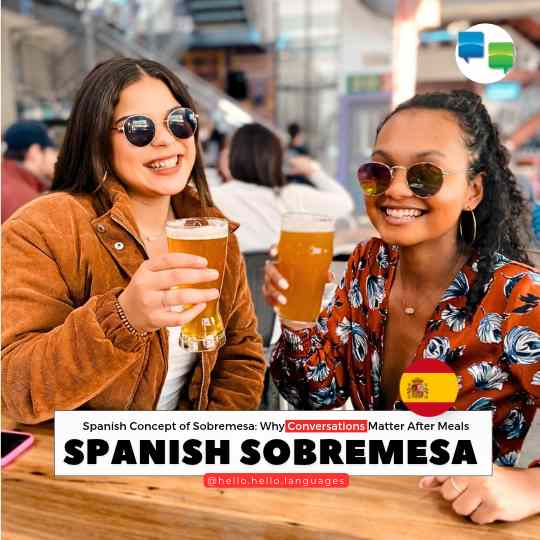
Modern lifestyles, demanding work schedules and changing family routines have influenced how people spend their time. Not everyone has the opportunity to enjoy lengthy meals every day, particularly during working hours. Nevertheless, sobremesa remains relevant during weekends, holidays, family celebrations and social gatherings. It also continues to feature in discussions about Spanish lifestyle and the importance of preserving everyday cultural traditions. For international visitors, experiencing sobremesa can offer a different perspective on Spanish dining etiquette. A meal may finish, but the social occasion does not necessarily end with it.
What Can Other Cultures Learn from Sobremesa?
Sobremesa is a reminder that food traditions are not only about recipes, ingredients or cooking methods. They also reflect how communities interact, welcome guests and organise their social lives. Different cultures have their own versions of lingering over meals, but the Spanish expression gives this practice a distinct identity. It encourages people to appreciate conversation as an essential part of dining rather than something that happens only before or after it.
Cultural Perspective
“Food is an important part of Spanish identity, but the experience does not end when the meal is finished. Sobremesa reflects a cultural appreciation for conversation, hospitality and the pleasure of spending unhurried time together.” Says Ms Sarah Gontijo, CEO & Co-Founder, Hello-Hello, who holds a Bachelor’s in Law from Faculdades Milton Campos and a Master’s in Political Management from The George Washington University.
Learn Spanish (Hello-Hello)
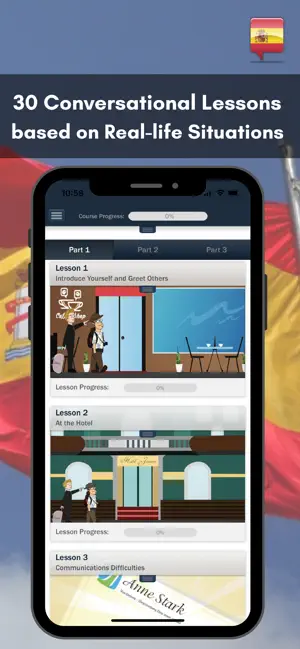
Check out the new version of our Spanish language learning app for iPhone and iPad. Learn Spanish with Hello-Hello offers a completely new and improved version of our app with animated videos, a redesigned interface and additional features! Follow our adorable characters on a fun journey to learn Spanish!
Seriously, this is now, by far, THE BEST language learning app available on iTunes 🙂
- Animated videos and comic strips.
- New games to practice reading and listening skills
- Cleaner and more friendly user interface
- Follow your course progress
- Take notes
- Receive notifications with lesson reminders. The more you practice, the more you learn!
- Receive notifications with new words to build your vocabulary.
Check out the iTunes store Hello-Hello Spanish app here, and the Android Play Store