
Italy enchants visitors with its art, food, landscapes, and history—but it also has a talent for confusing them. Many travellers recall a moment during their trip when they paused and thought, “Is this normal here?” The answer is yes. What feels puzzling at first is often part of Italy’s deeply expressive and tradition-rich culture. For learners of Italian, these habits are especially important because they explain how and why the language is used the way it is in real life. Below are some classic Italian habits that surprise tourists, explained in a way that helps language learners connect words with their cultural meaning, according to Hello-Hello, a leading Italian language learning app developer for iOS and Android devices.
Loud Conversations That Aren’t Fights It often looks dramatic: raised voices, intense facial expressions, hands moving rapidly, phrases like “Ma no!” or “Ti sbagli!” (You’re wrong!). Tourists may assume an argument is unfolding. In reality, Italians are simply discussing everyday topics—football, food, traffic, or politics. In Italian culture, passion equals involvement, not anger. A conversation filled with energy usually signals interest, not conflict. True anger sounds very different, and once you hear it, you’ll know.
Scarves, Even When It’s Warm (La cervicale) Seeing scarves wrapped tightly around necks on a pleasant 20°C day often baffles visitors. Italians strongly believe in avoiding drafts, or “colpo d’aria,” which they think causes neck pain, headaches, and stiffness—commonly referred to as la cervicale. You’ll hear warnings like “Copriti il collo” (Cover your neck). Tourists in T-shirts may feel confused, but for Italians, protecting the neck is basic health wisdom.
Goodbye Takes Longer Than Hello Ending a conversation in Italy is never quick. Whether in person or on the phone, farewells involve repeated “Ciao,” “Va bene,” “A dopo,” “Buonanotte,” and then more “ciao.” Goodbyes are emotional closures, not abrupt exits. For language learners, this explains why Italians rarely hang up or walk away suddenly—it would feel cold and incomplete.
Espresso Is Fast, Not Romantic Tourists imagine slow coffee moments, but Italians drink espresso quickly, standing at the bar. The exchange is simple: “Un caffè, per favore.” A few seconds later, the cup is empty. Milk-based coffees like cappuccino belong to breakfast hours only. Ordering one late in the day marks you as a visitor instantly. Coffee is fuel, not leisure—except when paired with conversation.
Dinner Starts Late and Ends Very Late Restaurants opening at 6:30 p.m. is rare. Dinner usually begins after 8:30 p.m., especially in summer. Even then, meals unfold slowly: pasta first, then a main course, fruit or dessert, coffee, and conversation. You may hear “Mangiamo con calma” (Let’s eat slowly). Meals are social rituals, not something to rush.
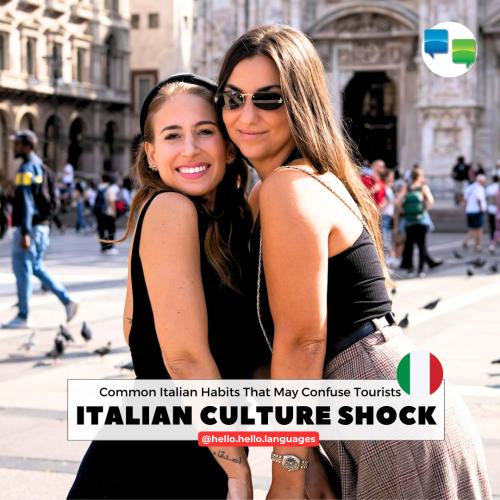
Standing Very Close While Talking
Italians speak at close range. If you step back, they may unconsciously step forward. This proximity signals warmth, trust, and engagement. Combined with phrases like “Dimmi” (Tell me) or “Ascolta” (Listen), closeness shows the conversation matters.
Affectionate Words for Everyone
Don’t be surprised if a stranger calls you “amore,” “tesoro,” “caro,” or “bella.” These terms are friendly, not flirtatious. They soften interactions and create instant familiarity. However, note the contrast: professional and academic settings remain formal, often using “Lei” instead of “tu.”
Rules Interpreted with Flexibility
Signs, queues, and rules often come with room for interpretation. You may notice people crossing streets boldly or parking creatively. Italians rely heavily on judgment and negotiation rather than strict enforcement. This doesn’t mean chaos—it’s a system based on situational logic.
Dressing by Season, Not Temperature
Italians dress according to the calendar, not the forecast. Boots in October, coats in March, scarves whenever the season says so. Style and coherence matter more than comfort. Dressing “out of season” is more shocking than dressing impractically.
Avoiding Air Conditioning
Even during intense heat, Italians may switch off AC to avoid illness, stiffness, or la cervicale. Opening windows is preferred to “artificial air.” Tourists may suffer the heat, but locals fear drafts more than sweat.
Why Does This Matters for Italian Learners?
These habits reveal core values: emotional warmth, connection, tradition, and expressive living. Language in Italy mirrors this—rich in tone, gesture, and feeling. Once you understand these quirks, Italy stops being confusing and starts feeling familiar. At that point, you’re no longer just learning Italian. You’re living it.
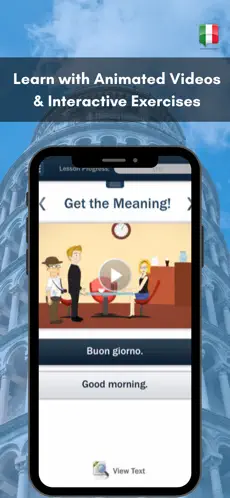
Learn Italian (Hello-Hello)
Learn Italian Phrases, Words, and Conversations with the top-selling language-learning app! Learning Methodology Based on Animation, Cartoon Scripts, Word Games & More. Learn to communicate effectively from LESSON 1! Hello-Hello offers 30 conversational lessons based on real-life situations rather than a collection of out-of-context words and phrases. Dialogues are presented and then broken down into sentences by sentence where you can practice pronunciation and writing skills
The research-based methodology was developed in collaboration with the most prestigious institution for language teachers and professionals: The American Council on the Teaching of Foreign Languages – ACTFL
iTunes Store Link – https://apps.apple.com/us/app/learn-italian-hello-hello/id426680688
Android Play Store – https://play.google.com/store/apps/details?id=com.Hello_Hello.Italian.Main&pli=1