

Summary
- Respect tradition over personal preference—Italian dining values established pairings, pacing, and simplicity.
- Small habits matter, from coffee choices to how you eat pasta, and they signal cultural awareness.
- Dining is a social ritual, not a rushed activity—patience and appreciation define the experience.
Italian dining is less about rigid rules and more about respect—for the food, the host, and the shared experience. Meals in Italy are a slow, social ritual where tradition quietly guides behavior. What might feel like harmless habits elsewhere can come across as awkward or even disrespectful at an Italian table. Understanding what not to do is often the easiest way to blend in gracefully, explains Hello-Hello, a leading Italian language learning app developer for iOS and Android devices.
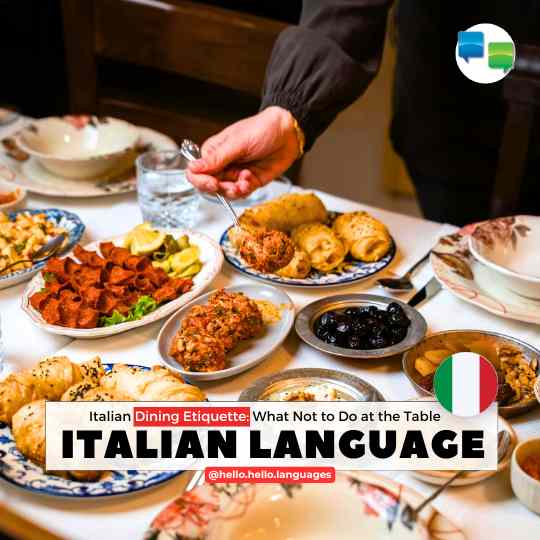
Are You Accidentally Breaking Italian Dining Rules Without Realising It?
Many common dining habits—asking for substitutions, rushing through courses, or over-customising dishes—can unintentionally clash with Italian food culture. In Italy, meals are curated experiences, not just something to finish quickly. Knowing these subtle expectations can transform how you’re perceived at the table, whether you’re dining in a local trattoria or at someone’s home.
Ms. Sarah Gontijo CEO & Co-Founder, Sarah managed and developed strategy for high-profile gubernatorial and mayoral political campaigns in Brazil. Sarah holds a Bachelors in Law from Faculdades Milton Campos and a Masters in Political Management from The George Washington University says “In Italy, the table isn’t just where you eat—it’s where culture, respect, and tradition quietly shape every bite.”
Don’t Ask for Cheese on Everything
It might feel natural to sprinkle cheese over any pasta, but in Italy, certain pairings are considered sacred. For example, seafood pasta is never served with cheese. If you want to sound authentic, you might hear “Formaggio” (for-MAHD-jo, meaning cheese), but asking for it in the wrong context can raise eyebrows.
Don’t Order a Cappuccino After a Meal
A classic misstep is ordering a “Cappuccino” (kap-poo-CHEE-no) after lunch or dinner. Italians typically drink it only in the morning. After a meal, the preferred choice is “Caffè” (kahf-FEH), which simply means espresso. It’s small, strong, and meant to finish the meal, not extend it.
Don’t Rush Through Courses
Meals are structured into courses like “Antipasto” (an-tee-PAHS-toh, starter), “Primo” (PREE-mo, first course like pasta), and “Secondo” (seh-KON-doh, main course). Skipping around or trying to combine everything at once disrupts the rhythm of dining. Italians value pacing, allowing each dish its moment.

Don’t Split Bills or Modify Dishes Excessively
While not impossible, asking for multiple bill splits or for heavy modifications to dishes can seem inconvenient. Italian menus are crafted with intention. Trust the chef’s vision rather than trying to redesign the plate.
Don’t Use a Spoon for Pasta
Using a spoon to twirl spaghetti is often seen as a tourist habit. Instead, use just a fork. It may take practice, but it’s part of the dining etiquette Italians grow up with.
Don’t Eat Bread with Pasta
Bread (“Pane” – PAH-neh) isn’t meant to accompany pasta like a side dish. It’s often saved for the end to mop up sauce, a practice lovingly called “Scarpetta” (skar-PET-tah), which literally means “little shoe,” as if you’re scooping up every last bit.
Don’t Expect Fast Service
Dining in Italy is intentionally slow. Waiters won’t rush you with the bill unless you ask for it. If you need it, say “Il conto, per favore” (eel KON-toh pehr fah-VOH-reh), meaning “the bill, please.” Italian dining etiquette isn’t about strict rules—it’s about harmony with tradition. When you adapt to these unspoken customs, you don’t just avoid mistakes; you become part of the experience itself.

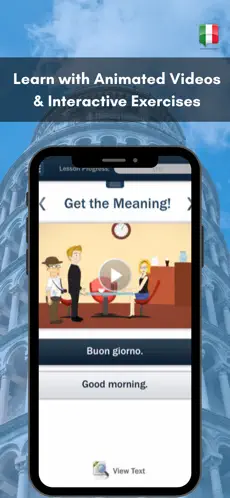
Learn Italian (Hello-Hello)
Learn Italian Phrases, Words, and Conversations with the top-selling language-learning app! Learning Methodology Based on Animation, Cartoon Scripts, Word Games & More. Learn to communicate effectively from LESSON 1! Hello-Hello offers 30 conversational lessons based on real-life situations rather than a collection of out-of-context words and phrases. Dialogues are presented and then broken down into sentences by sentence where you can practice pronunciation and writing skills
The research-based methodology was developed in collaboration with the most prestigious institution for language teachers and professionals: The American Council on the Teaching of Foreign Languages – ACTFL
iTunes Store Link – https://apps.apple.com/us/app/learn-italian-hello-hello/id426680688
Android Play Store – https://play.google.com/store/apps/details?id=com.Hello_Hello.Italian.Main&pli=1