
Summary
- Learning basic Russian grocery words makes shopping easier and more comfortable.
- Simple phrases and pronunciation help improve communication with local shopkeepers.
- Grocery vocabulary is a practical way to build everyday Russian language skills.

Shopping for groceries in a foreign country can feel confusing at first, especially when product labels, prices, and conversations happen in a language you do not fully understand. Learning a few essential Russian grocery words can make the experience smoother, more enjoyable, and far less stressful. Whether you are visiting Russia, living there temporarily, or simply learning the language for travel purposes, knowing common food-related vocabulary helps you communicate with confidence inside supermarkets, local markets, and convenience stores. Russian grocery shopping culture is also quite interesting because many local stores still use traditional food names and phrases that tourists may not recognise immediately. A simple understanding of everyday words can help you ask for items, understand packaging, and interact politely with shopkeepers.

What Russian Words Should You Know Before Grocery Shopping?
Before entering a grocery store, it helps to know basic Russian food and shopping vocabulary. These words are commonly used in supermarkets, local shops, and vegetable markets across Russia. Even speaking a few words can make communication easier and show respect for the local culture.
Ms Sarah Gontijo, CEO & Co-Founder, Sarah managed and developed a strategy for high-profile gubernatorial and mayoral political campaigns in Brazil. Sarah holds a Bachelor’s in Law from Faculdades Milton Campos and a Master’s in Political Management from The George Washington University says, “Learning grocery words in a new language is not just about shopping—it is about connecting with people, culture, and everyday life one conversation at a time.”
Here are some essential Russian grocery words along with their pronunciation and English meanings.
|
Russian Word |
Pronunciation | Meaning |
|
Хлеб |
Khlyeb | Bread |
|
Молоко |
Malako | Milk |
|
Яйца |
Yaytsa | Eggs |
| Сыр | Seer |
Cheese |
|
Масло |
Maslo | Butter/Oil |
|
Вода |
Vada | Water |
|
Сахар |
Sakhar | Sugar |
|
Соль |
Sol |
Salt |
| Мясо | Myasa |
Meat |
| Рыба | Reeba |
Fish |
| Курица | Kooritsa |
Chicken |
| Овощи | Ovoshchi |
Vegetables |
|
Фрукты |
Frookty | Fruits |
|
Картофель |
Kartofel |
Potato |
| Помидор | Pameedor |
Tomato |
|
Яблоко |
Yablaka |
Apple |
|
Чай |
Chai |
Tea |
|
Кофе |
Kofe |
Coffee |
| Магазин | Magazin |
Store/Shop |
| Сколько стоит? | Skolka stoit? |
How much does it cost? |
Understanding Common Grocery Categories in Russian
Russian supermarkets are usually divided into sections by food category. Learning these category names can help you quickly find what you need without relying completely on translation apps. The word “Овощи” refers to vegetables, while “Фрукты” means fruits. Dairy products are often grouped under “Молочные продукты” which translates to dairy products. Meat sections may display signs saying “Мясо,” and bakery sections often use the word “Хлеб.” Recognising these terms can save time and make grocery shopping less overwhelming, especially in larger supermarkets where English signs may not always be available.
How Pronunciation Helps During Grocery Shopping?
Russian pronunciation may seem difficult initially because some letters sound very different from English. However, even approximate pronunciation is often enough for locals to understand what you are trying to say. For example, asking “Где хлеб?” pronounced as “Gdye khlyeb?” means “Where is the bread?” Similarly, “Сколько стоит?” is one of the most useful phrases because it helps you ask the price of any product. Practising pronunciation before shopping can make conversations smoother and increase confidence while interacting with store staff.
Useful Russian Phrases for Grocery Stores
Knowing individual words is helpful, but combining them into simple phrases makes communication even better. Basic shopping phrases can help you ask questions politely and understand responses more easily. “Спасибо” meaning “Thank you” and pronounced “Spaseeba” is widely used and appreciated everywhere. “Пожалуйста,” pronounced “Pazhaluysta,” means “Please” or “You’re welcome.” If you need help finding an item, you can say “Где молоко?” meaning “Where is the milk?” These small conversational phrases make grocery shopping feel more natural and comfortable.
Why Learning Grocery Vocabulary Improves Language Skills?
Food and grocery vocabulary are among the most practical parts of learning any language because they are used in daily life. Grocery shopping involves reading labels, understanding prices, asking questions, and interacting with people regularly. Learning these common Russian words helps improve pronunciation, listening skills, and confidence in real-world situations. Since food names are easy to practice daily, they also become memorable much faster than formal textbook vocabulary. Over time, even a small grocery-related vocabulary can help build stronger conversational Russian skills naturally. Knowing essential Russian grocery words can make shopping easier, less stressful, and far more enjoyable. Simple vocabulary related to food, prices, and everyday products helps travellers and language learners communicate more confidently in supermarkets and local markets. From asking for bread and milk to understanding store signs and prices, these useful Russian words create a strong foundation for practical communication. Even learning a few common phrases can turn grocery shopping into an opportunity to practice and improve your Russian language skills every day.
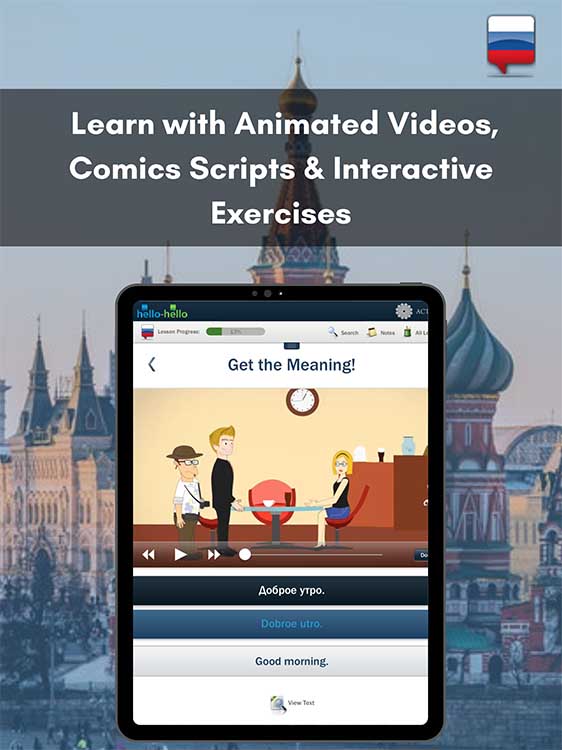
Learn Russian (Hello-Hello)
Learn Russian (Hello-Hello) is a full-fledged language course with 30 LESSONS developed in collaboration with the American Council on the Teaching of Foreign Languages (ACTFL), so you can be assured that these lessons follow an effective research-based methodology. All lessons are conversation-based on realistic dialogues and situations, rather than a collection of out-of-context words and phrases.
– Research-based methodology developed in collaboration with the most prestigious institution for language teachers and professionals: The American Council on the Teaching of Foreign Languages – ACTFL – INNOVATIVE METHODOLOGY: Developed in collaboration with ACTFL
– The American Council on the Teaching of Foreign Languages, which is the largest and most respected association for language teachers and professionals. ACTFL’s guidelines are followed by all major universities in the USA.
– COMMUNICATION SKILLS: Learn to communicate effectively from LESSON 1! Hello-Hello offers 30 conversational lessons based on real-life situations rather then a collection of out-of-context words and phrases. Dialogues are presented and then broken down into sentences, where you can practice pronunciation and writing skills
– VOCABULARY BUILDING: Practice vocabulary with hundreds of fun and interactive Flashcards, plus our innovative Build Your Vocabulary exercise, where you can practice alternate words and phrases from within the dialogues.