
Summary
- Discover Italy’s most iconic street foods, from Naples’ Pizza a Portafoglio and Florence’s Lampredotto to Sicily’s famous Arancini and Cannoli.
- Learn the meaning, pronunciation, and cultural significance behind each dish while exploring the regional traditions that make Italian cuisine unique.
- Find out why authentic street food experiences are one of the best ways for travellers to connect with Italy’s history, local culture, and culinary heritage.
Italy is a dream destination for food lovers. While its fine dining restaurants and traditional trattorias attract millions of visitors every year, some of the country’s most authentic culinary experiences can be found right on its streets. Italian street food combines centuries-old recipes, regional traditions, and fresh local ingredients to create flavours that are both simple and unforgettable. From Naples’ famous folded pizzas to Sicily’s crispy rice balls, every region offers something unique for travellers eager to eat like a local.
If you’re planning a trip to Italy, these iconic street foods deserve a place on your culinary bucket list, shares Hello-Hello, a leading Italian language learning app developer for iOS and Android devices.
Why Is Italian Street Food So Popular Among Travellers?
Italian street food is popular because it offers an authentic taste of local culture at an affordable price. Unlike restaurant dining, street food allows travellers to sample regional specialities while exploring cities and towns. From Naples to Sicily, each region has developed unique recipes that reflect its history, ingredients, and traditions. These portable dishes are quick, delicious, and often prepared using recipes that have been passed down through generations.
Ms Sarah Gontijo, CEO & Co-Founder, Hello-Hello, who holds a Bachelor’s in Law from Faculdades Milton Campos and a Master’s in Political Management from The George Washington University says, “Italian street food is more than a quick meal—it’s a delicious journey through centuries of regional traditions, local flavours, and authentic cultural experiences.”
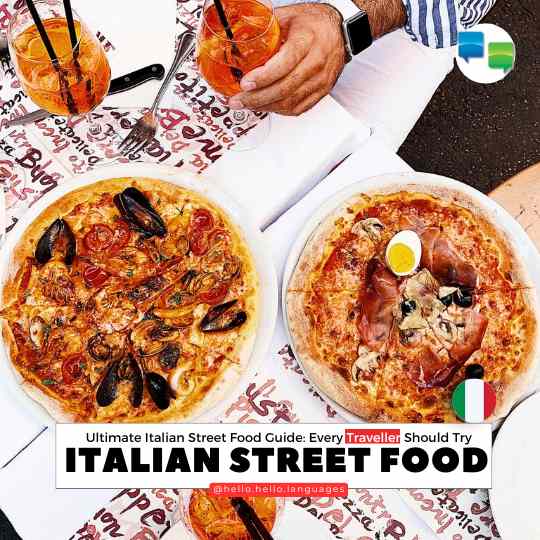
Pizza a Portafoglio (Wallet Pizza)
Pronunciation: Pee-tsa ah por-ta-FOH-lyoh – The Italian word Portafoglio means “wallet.” This traditional Neapolitan street pizza gets its name because it is folded into quarters and served in paper, making it compact enough to carry in one hand like a wallet. Fresh from a wood-fired oven, the pizza remains soft in the centre while developing a slightly crisp exterior. It is one of the most affordable and authentic foods you can enjoy while exploring the streets of Naples.
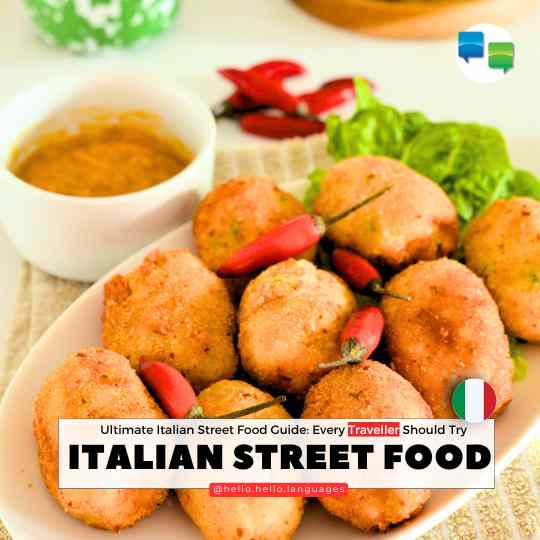
Arancini (Little Oranges)
Pronunciation: Ah-ran-CHEE-nee – The word Arancini translates to “little oranges,” a reference to their round shape and golden colour after frying. These rice balls are typically filled with ragù, mozzarella, peas, or mushrooms before being coated in breadcrumbs and deep-fried. Originating in Sicily, Arancini offer a perfect combination of crunchy texture and rich, savoury filling, making them one of Italy’s most beloved street snacks.
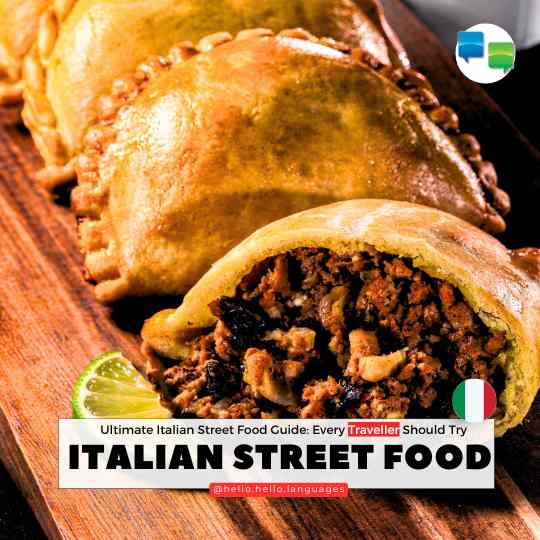
Panzerotti (Stuffed Dough Pockets)
Pronunciation: Pan-tseh-ROT-tee – Panzerotti are small folded pockets of dough that are filled with ingredients such as mozzarella, tomato sauce, ham, or vegetables before being fried until golden brown. Popular throughout Southern Italy, they resemble miniature calzones but are typically crispier due to the frying process. The contrast between the crunchy exterior and the gooey filling makes Panzerotti a favourite among locals and tourists alike.
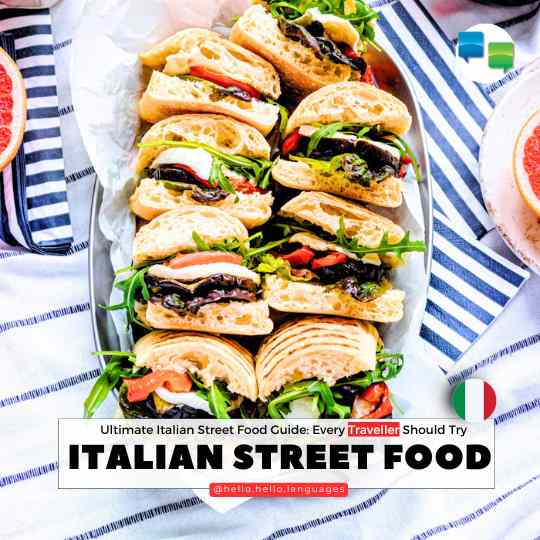
Lampredotto (Florentine Tripe Sandwich)
Pronunciation: Lam-preh-DOT-toh – Lampredotto is one of Florence’s most famous street foods and a dish deeply rooted in Tuscan culinary tradition. It is prepared from a specific part of beef stomach that is slowly simmered in broth until tender. The meat is then served inside a crusty bread roll, often topped with green herb sauce. While it may sound unusual to first-time visitors, Lampredotto is considered an essential food experience in Florence and is cherished by generations of locals.
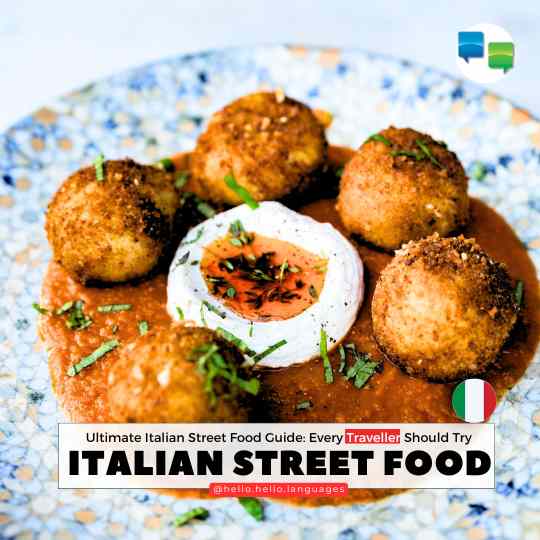
Supplì (Roman Rice Croquettes)
Pronunciation: Soo-PLEE – Supplì are Rome’s answer to Sicily’s Arancini. These fried rice croquettes are made with rice cooked in tomato sauce and filled with mozzarella cheese. Once fried, the cheese stretches dramatically when the croquette is opened, creating what Italians call “al telefono,” meaning “like a telephone wire.” Supplì are commonly enjoyed as a quick snack before meals or while exploring Rome’s historic neighbourhoods.
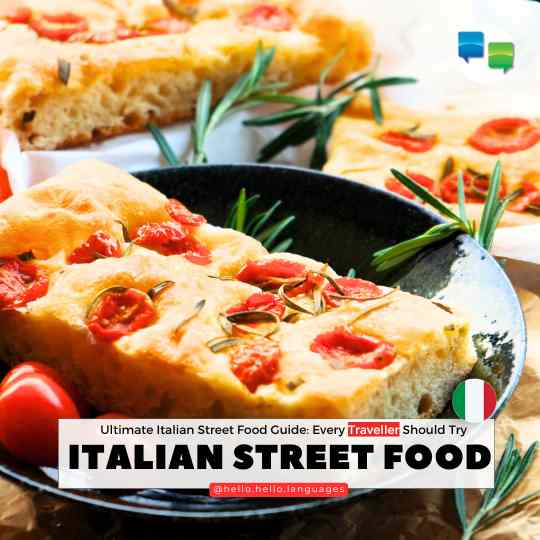
Focaccia (Traditional Flatbread)
Pronunciation: Foh-KAH-chah – The name Focaccia comes from the Latin word meaning “hearth” or “fireplace,” referring to the traditional method of baking bread over hot stones. This soft and airy flatbread is typically seasoned with olive oil and sea salt, although many regional variations include herbs, onions, olives, or cheese. Particularly popular in Liguria, Focaccia is enjoyed throughout Italy as a snack, breakfast item, or light meal.
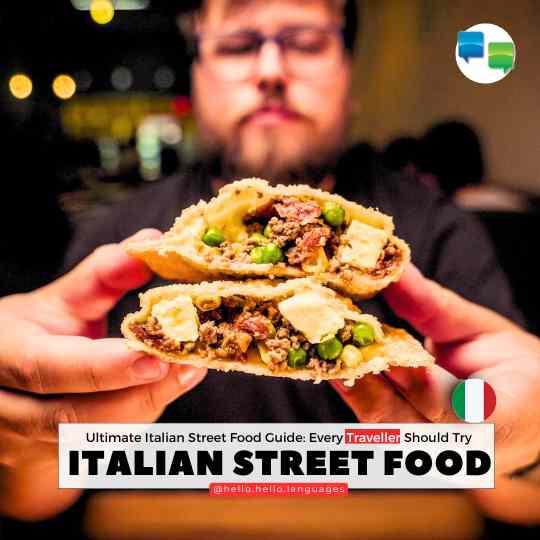
Piadina (Italian Flatbread Wrap)
Pronunciation: Pya-DEE-nah – Piadina is a thin flatbread that originated in the Emilia-Romagna region. Traditionally cooked on a flat griddle, it is sliced open and filled with ingredients such as cured meats, cheeses, fresh vegetables, and spreads. The simplicity of Piadina allows the quality of its ingredients to shine, making it one of Italy’s most satisfying and versatile street foods.
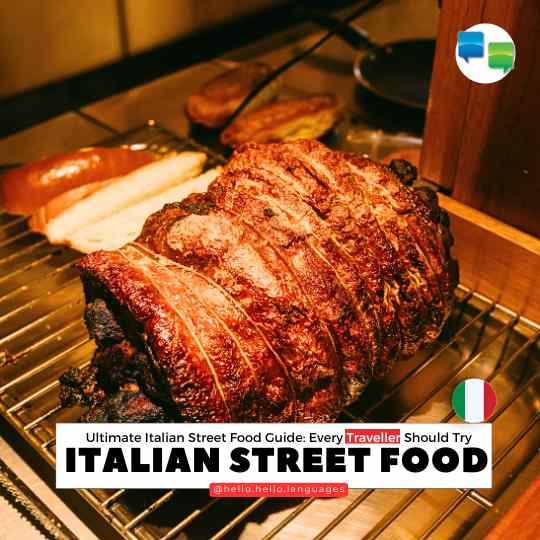
Porchetta (Herb-Roasted Pork)
Pronunciation: Por-KET-tah – The word Porchetta simply refers to a traditional Italian roast pork preparation. The pork is seasoned generously with garlic, rosemary, fennel, and various herbs before being slow-roasted for hours. Vendors often slice the meat and serve it inside fresh bread rolls. The result is a sandwich bursting with flavour, featuring crispy skin and incredibly tender meat that has become a staple of central Italian street food culture.
Olive Ascolane (Stuffed Fried Olives)
Pronunciation: OH-lee-veh ah-sko-LAH-neh – Named after the town of Ascoli Piceno, Olive Ascolane are large green olives stuffed with seasoned meat, coated in breadcrumbs, and deep-fried. The recipe dates back centuries and remains particularly popular in central Italy. Their combination of salty olives, savoury filling, and crispy coating creates a unique flavour profile that makes them a favourite at markets, festivals, and food stalls.
Cannoli (Little Tubes)
Pronunciation: Kan-NOH-lee – Cannoli translates to “little tubes,” referring to the shape of the pastry shell. Originating in Sicily, these iconic desserts feature crispy fried pastry filled with sweet ricotta cream. Depending on the region and bakery, Cannoli may also be garnished with pistachios, candied fruit, or chocolate chips. Their balance of crunch and creamy sweetness has made them one of Italy’s most famous desserts worldwide.
Italian street food is far more than a convenient meal. It represents centuries of regional traditions, family recipes, and local pride. Every city offers its own specialities, allowing travellers to discover Italy through its flavours as much as through its landmarks. Whether you’re biting into a freshly folded pizza in Naples, enjoying Arancini in Sicily, or tasting Lampredotto in Florence, these street foods provide an authentic glimpse into the heart of Italian culture. For anyone visiting Italy, trying these local favourites is one of the most rewarding ways to experience the country.

Learn Italian (Hello-Hello)
Learn Italian Phrases, Words, and Conversations with the top-selling language-learning app! Learning Methodology Based on Animation, Cartoon Scripts, Word Games & More. Learn to communicate effectively from LESSON 1! Hello-Hello offers 30 conversational lessons based on real-life situations rather than a collection of out-of-context words and phrases. Dialogues are presented and then broken down into sentences by sentence where you can practice pronunciation and writing skills
The research-based methodology was developed in collaboration with the most prestigious institution for language teachers and professionals: The American Council on the Teaching of Foreign Languages – ACTFL
iTunes Store Link – https://apps.apple.com/us/app/learn-italian-hello-hello/id426680688
Android Play Store – https://play.google.com/store/apps/details?id=com.Hello_Hello.Italian.Main&pli=1