
For learners of the Japanese language, understanding how to express affection is just as important as learning grammar or vocabulary. In Japanese culture, emotions are often expressed subtly, and the same word can carry different meanings depending on context, tone, and relationship. Unlike some languages where affection is openly verbal, Japanese uses carefully chosen words to reflect emotional boundaries. Learning these expressions correctly helps learners communicate naturally and respectfully.
Below are commonly used Japanese words and phrases for expressing platonic and romantic affection, explained individually with pronunciation by Hello-Hello, a top Japanese language learning app developer for iOS and Android devices.
好き (Suki) – “Like”
Pronunciation: soo-kee
好き is one of the most commonly used words to express affection in Japanese. It means “like” and is used in both platonic and romantic contexts. When used casually, it can express liking a friend, hobby, or food. However, when said directly to a person with seriousness, it may imply romantic interest. Context and tone are extremely important when using this word.
大好き (Daisuki) – “Like Very Much.”
Pronunciation: dai-soo-kee
大好き is a stronger version of 好き and means “like a lot” or “really like.” It is often used for close friends, family members, pets, and favorite things. In romantic situations, it can express deep affection, but it is also commonly used in non-romantic relationships, making it a warm yet safe expression of fondness.
大切 (Taisetsu) – “Important / Precious.”
Pronunciation: tai-setsu
大切 is used to express emotional value rather than romantic desire. It means “important” or “precious” and is commonly used for family members, close friends, or meaningful relationships. Saying someone is 大切 conveys deep respect and care without sounding overly emotional or romantic.
仲がいい (Naka ga Ii) – “Close / Get Along Well”
Pronunciation: na-ka ga ee
仲がいい is a phrase used to describe a good, harmonious relationship. It is commonly used to talk about friendships or family bonds. While it does not directly express affection, it implies emotional closeness and mutual understanding in a subtle and culturally appropriate way.
好きです (Suki Desu) – Romantic Confession
Pronunciation: soo-kee des
When 好きです is said clearly and directly to someone, it often serves as a romantic confession. Unlike casual usage, this phrase carries emotional weight when used in a private or serious setting. Japanese confessions are typically sincere and intentional, making this phrase significant.
大好きです (Daisuki Desu) – Strong Romantic Affection
Pronunciation: dai-soo-kee des
大好きです expresses strong romantic feelings and is commonly used between couples. It conveys affection, warmth, and emotional closeness. While not as intense as “I love you” in English, it is heartfelt and commonly accepted in romantic relationships.
愛してる (Aishiteru) – “I Love You”
Pronunciation: ai-shi-te-ru
愛してる is the most powerful expression of love in Japanese. It signifies deep, long-term commitment and emotional bond. This phrase is rarely used in daily conversation and is usually reserved for spouses or very serious relationships. Using it too casually can feel unnatural or overwhelming.
大切な人 (Taisetsu na Hito) – “A Precious Person”
Pronunciation: tai-setsu na hee-to
This phrase is often used to refer to a romantic partner in a mature and indirect way. Instead of openly saying “boyfriend” or “girlfriend,” many Japanese speakers prefer this expression to emphasize emotional importance rather than labels.
For Japanese language learners, expressing affection is not just about vocabulary but also cultural awareness. Each word carries emotional nuance and social boundaries. By learning these expressions individually and understanding their proper usage, learners can communicate affection in Japanese in a way that feels natural, respectful, and emotionally accurate.
Learn Japanese (Hello-Hello)
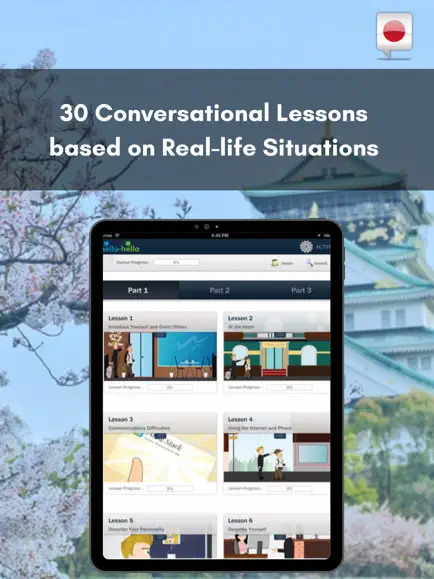
Hello-Hello, which is the leading mobile language learning application developer, offers users a unique opportunity to learn the Japanese language with iOS and Android Apps. Learn Japanese by Hello-Hello iPhone app, which is developed in collaboration with The American Council on the Teaching of Foreign Languages (ACTFL), offers 30 conversational lessons based on real-life situations rather than a collection of out-of-context words and phrases. Dialogues are presented and then broken down into sentences where you can practice pronunciation and writing skills. The key features of Hello-Hello’s Japanese app that make it THE BEST language learning app available on iTunes are –
- Animated videos and comic strips– New games to practice reading and listening skills
- Cleaner and more friendly user interface
- Follow your course progress
- Take notes
- Receive notifications with lesson reminders. The more you practice, the more you learn!
- Receive notifications with new words to build your vocabulary.
Android Play – Learn Japanese Hello-Hello, iTunes Store – Learn Japanese (Hello-Hello)