

English is a beautiful language, but also a confusing one. Just when you think you’ve got it figured out, you stumble upon words like bare and bear, or flour and flower. They sound exactly the same but mean entirely different things. Welcome to the wonderfully tricky world of homophones — the words that play mind games with your ears. Whether you’re a student, writer, or language enthusiast, understanding homophones is essential to avoid miscommunication, spelling errors, and some very funny mix-ups, as explained by Hello-Hello, a top English language learning app developer for iOS and Android devices. 
What Are Homophones?
Homophones are words that sound the same when spoken but have different meanings and usually different spellings. The term comes from Greek, where “homo” means same and “phone” means sound. For example:
- Pair (a couple) vs. Pear (the fruit)
- Sea (the ocean) vs. See (to look)
Homophones are a subcategory of homonyms, but what makes them unique is the pronunciation similarity despite different meanings and spellings. They can be confusing in writing, even for native speakers.
Common English Homophones (With Examples)
Homophone Pair Meaning 1 Meaning 2
Brake/Break To stop a vehicle To shatter or fracture
Their/There/They’re Belonging to them A place
Write/Right To compose text Correct or a direction
Hear/Here To listen In this place
Peace/Piece Calmness A portion of something
Using the wrong one can lead to awkward or even hilarious mistakes. Imagine writing “I need a peace of cake” — your dessert suddenly becomes a philosophy class!
Why Are Homophones Important?
In verbal communication, homophones usually don’t cause confusion because context clarifies meaning. But in writing, mixing them up can:
- Change the entire meaning of a sentence
- Affect your credibility in formal settings (like business or academia)
- Lead to grammar errors in exams or professional documents
Writers, editors, and students must pay close attention to homophones to ensure clear communication.
Do Other Languages Have Homophones?
Absolutely! Homophones are not exclusive to English. Examples in Other Languages:
- Mandarin Chinese: Has one of the highest numbers of homophones due to limited syllables and tones. For example, “shì” can mean to be, room, market, or thing depending on the tone.
- French: Words like verre (glass), vert (green), and vers (toward) all sound similar but mean different things.
- Japanese: Uses kanji to differentiate homophones, but many words sound alike due to limited sound combinations.
- Spanish: Has fewer homophones, but examples include bienes (goods) and vienes (you come).
This phenomenon is common in many languages with phonetic overlaps or limited syllabic sounds. Homophones may be tricky, but they add richness and humor to language. Understanding and mastering them can help you become a better communicator, writer, and even a pun-maker! So the next time you’re unsure whether to use bare or bear, pause, think, and remember: even words that sound the same may be walking entirely different paths.
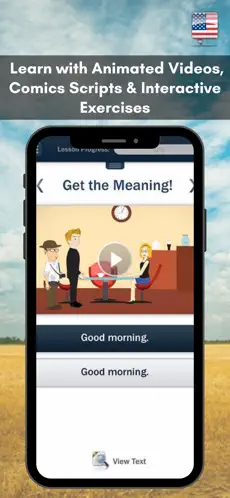
Learn English by Hello-Hello
- Animated videos and comic strips– New games to practice reading and listening skills
- Cleaner and more user-friendly interface
- Follow your course progress
- Take notes
- Receive notifications with lesson reminders. The more you practice, the more you learn!
- Receive notifications with new words to build your vocabulary
iTunes Link – https://apps.apple.com/us/app/learn-english-by-hello-hello/id423320493 Android Playstore – https://play.google.com/store/apps/details?id=com.Hello_Hello.English.Main