

Emotions are a core part of human communication. Whether you’re happy, sad, angry, or surprised, being able to express your feelings in another language helps build deeper connections. Spanish, a language rich in expression and culture, offers many ways to convey emotions clearly and naturally. This article will guide you through the essential phrases and vocabulary to express your emotions effectively in Spanish, as explained by Hello-Hello, a leading Spanish language learning app developer for iOS devices and Android devices.
- Basic Emotion Vocabulary – Start by learning the most common emotional adjectives. Here are some examples:
Feliz – Happy Triste – Sad Enojado/Enojada – Angry Emocionado/Emocionada – Excited Nervioso/Nerviosa – Nervous Cansado/Cansada – Tired Asustado/Asustada – Scared Sorprendido/Sorprendida – Surprised
Remember that adjectives change based on gender and sometimes number. For example, a woman would say, “Estoy cansada,” while a man would say, “Estoy cansado.”
- Using the Verb “Estar” – In Spanish, emotions are usually expressed with the verb “estar” (to be), because they describe temporary states.
Examples: Estoy feliz. (I am happy.) Estamos nerviosos. (We are nervous.) ¿Estás enojado? (Are you angry?)
“Estar” is more appropriate than “ser” when talking about feelings, as emotions are generally not permanent.
- Common Phrases to Express Feelings – Here are some useful phrases:
Me siento bien/mal. – I feel good / bad Tengo miedo. – I am afraid (literally: I have fear) Estoy de buen humor. – I’m in a good mood Estoy deprimido. – I’m feeling depressed Me molesta… – It bothers me… Estoy emocionado por… – I’m excited about…
- Asking Others About Their Feelings – Expressing emotions also means understanding others. Try these questions:
¿Cómo te sientes? – How do you feel? ¿Estás bien? – Are you okay? ¿Qué te pasa? – What’s wrong? ¿Por qué estás triste? – Why are you sad?
- Practice with Real Situations – Practice expressing emotions by journaling in Spanish, talking to native speakers, or using language apps. Describe how you feel each day using “estar” and emotional adjectives. For example: “Hoy estoy un poco estresado, pero contento.”
Mastering emotional vocabulary in Spanish helps you become not only a better speaker but also a more empathetic communicator. With consistent practice, you’ll find it easier to share your inner world in Spanish just as you do in your native tongue.
Learn Spanish (Hello-Hello)
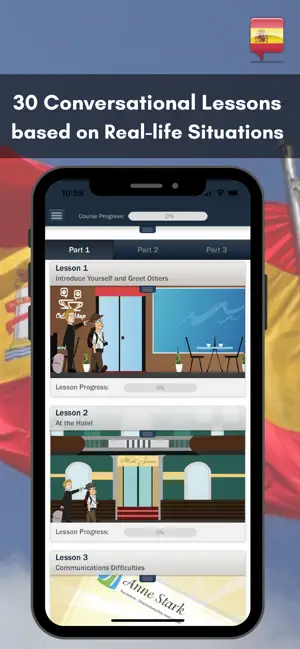
- Animated videos and comic strips.
- New games to practice reading and listening skills
- Cleaner and more friendly user interface
- Follow your course progress
- Take notes
- Receive notifications with lesson reminders. The more you practice, the more you learn!
- Receive notifications with new words to build your vocabulary.