

The Japanese language is beautiful, rich, and unique — but for beginners, its writing system can feel like a puzzle. Unlike English, which uses only one alphabet (A–Z), Japanese uses three distinct scripts in combination. Understanding these alphabets is the first step toward mastering the language. This guide breaks down the Japanese writing system to help you start your journey with clarity and confidence, as explained by a leading Japanese language learning app developer for iOS devices, Hello-Hello. 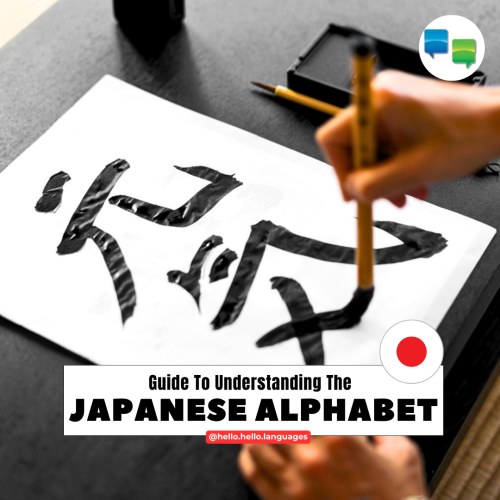
What Are the Three Japanese Alphabets?
Japan doesn’t use a single alphabet like many other languages. Instead, it uses three writing systems simultaneously:
- Hiragana (ひらがな)
- Katakana (カタカナ)
- Kanji (漢字)
Each has its own purpose, history, and usage. Let’s explore what makes them different and how they work together.
- Hiragana – The Foundation – Hiragana is the basic phonetic alphabet in Japanese and is usually the first script taught to children and beginners. It consists of 46 characters, each representing a specific syllable (like “ka”, “mo”, “su”).
Used For:
-
- Native Japanese words
- Grammatical endings and particles
- Furigana (small script above kanji for pronunciation help)
Example: たべます (tabemasu) means “to eat”. Hiragana is essential for reading and writing Japanese fluently. Once you master this, you can begin forming simple sentences.
- Katakana – For Foreign Words – Katakana is another syllabary, also with 46 characters, but it’s used primarily to write loanwords, foreign names, and onomatopoeia (sound words).
Used For:
-
- Words borrowed from other languages (e.g., コンピュータ – konpyūta – “computer”)
- Foreign names (e.g., ジョン – Jon)
- Scientific names, brand names, or emphasis
Katakana often appears in advertising, menus, and technology-related content.
- Kanji – The Complex Characters – Kanji are Chinese-origin characters that represent ideas or concepts, not just sounds. Japanese uses thousands of kanji, although about 2,000 are commonly used in daily life.
Used For:
-
- Nouns (e.g., 水 – mizu – “water”)
- Verb and adjective stems (e.g., 食 – shoku/tabe – “eat”)
- Names
Kanji is the most challenging part of Japanese writing, as each character has multiple readings and meanings. Learning kanji takes time and effort, but they add richness and clarity to the language. 
How Do These Japanese Alphabets Work Together?
In real Japanese writing, all three scripts are often used in a single sentence. For example: 私はパンを食べます。 (“I eat bread.”)
- 私 (kanji for “I”)
- は (hiragana particle)
- パン (katakana for “bread”)
- を (hiragana particle)
- 食べます (kanji + hiragana for “eat”)
This combination allows Japanese to be both efficient and expressive, with different scripts enhancing readability. Understanding the Japanese writing system starts with recognising the roles of hiragana, katakana, and kanji. Hiragana gives you the foundation, katakana opens up the modern world of borrowed terms, and kanji connects you to centuries of culture and meaning. Mastery takes time, but with consistent effort, anyone can begin to read and write in Japanese. Embrace the complexity — and enjoy the journey!
Learn Japanese (Hello-Hello)
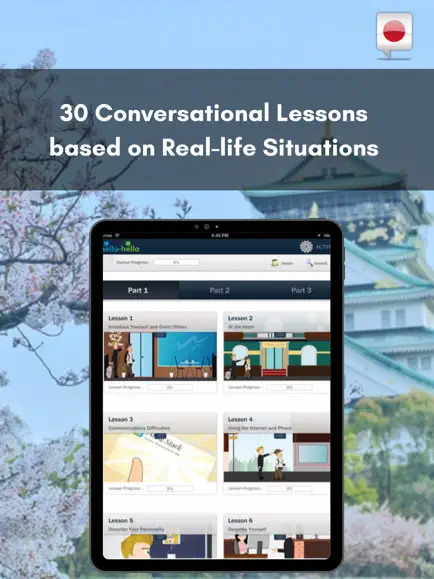
Hello-Hello, which is the leading mobile language learning application developer, offers users a unique opportunity to learn the Japanese language with iOS and Android Apps. Learn Japanese by Hello-Hello iPhone app, which is developed in collaboration with The American Council on the Teaching of Foreign Languages (ACTFL), offers 30 conversational lessons based on real-life situations rather than a collection of out-of-context words and phrases. Dialogues are presented and then broken down into sentence by sentence where you can practice pronunciation and writing skills. The key features of Hello-Hello’s Japanese app that make it THE BEST language learning app available on iTunes are –
- Animated videos and comic strips– New games to practice reading and listening skills
- Cleaner and more friendly user interface
- Follow your course progress
- Take notes
- Receive notifications with lesson reminders. The more you practice, the more you learn!
- Receive notifications with new words to build your vocabulary.
Android Play – Learn Japanese Hello-Hello, iTunes Store – Learn Japanese (Hello-Hello)